Why Your Event Budget Always Feels Wrong

Part 2 of 10 in the Event Planner's Financial Survival Guide
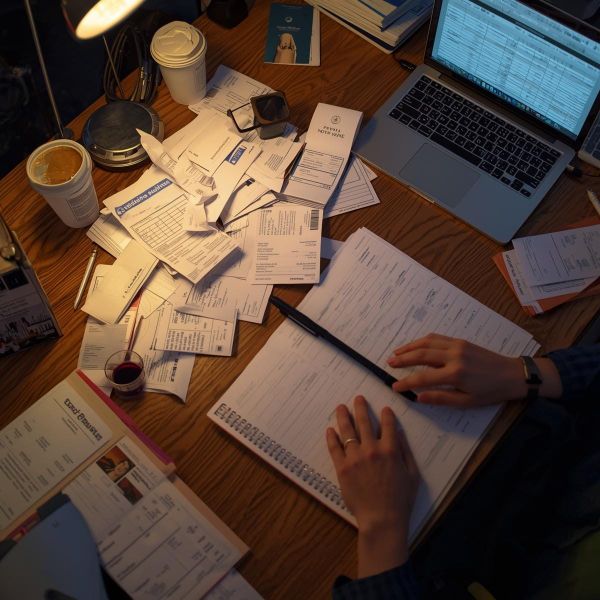
You've been in this business long enough to know that a budget is never really finished. It's a living document — something you're nursing from the first client conversation all the way through the post-event reconciliation. But there's a specific kind of discomfort that a lot of planners carry through an event, a low-grade anxiety that the numbers aren't quite right. Not dramatically wrong. Just… off. And the frustrating part is that you can't always put your finger on why.
The Cost vs. Price Confusion
Let's start with the most fundamental budget headache: the difference between what you pay and what you charge. You book a florist for $4,200. But you're billing the client $5,250 — your cost plus a 25% retail markup. Simple enough on its own. Now multiply that by 22 line items across catering, AV, décor, transportation, photography, staffing, rentals, and entertainment. Each with its own markup percentage. Some with deposits already paid, some with installments, some billed in full upfront. In a spreadsheet, tracking this means maintaining two parallel sets of numbers — vendor cost and client price — across every row, and making sure every formula is correct every time you touch the document. The margin for error is constant. A pasted value that loses its formula. A markup column that you accidentally applied twice. A line item added at the last minute that you priced from memory. The result is that your budget feels right because you built it carefully, but you're never fully confident it is right because you know how many opportunities for error exist between your vendor quotes and your client proposal.
The Category Problem
Here's another one. Most events have categories — florals, catering, AV, venue, transportation, and so on. Clean on paper. But in practice, categories blur. Does the florist's delivery fee go under florals or under logistics? Does the AV technician's overtime go under AV or under staffing? Does the custom-printed signage go under décor or under production? These are judgment calls, and they don't have universally right answers. But when you're building a budget across multiple categories in a spreadsheet, every judgment call creates a consistency risk. If you handle it one way for one event and a different way for another, your reporting becomes incomparable. If you handle it inconsistently within a single event, your category totals are misleading. Clients who ask for budget breakdowns by category — and they will — deserve accurate ones. And you deserve to be able to generate them without spending forty-five minutes cross-checking line items.
Mid-Event Changes Break Everything
The hardest thing about event budgets isn't building them. It's maintaining them when clients change their minds — and clients always change their minds. The upgrade from a standard bar package to a premium open bar. The added lighting package the client saw at another event and now wants for theirs. The guest count that grew by thirty people, which cascades into catering minimums, seating arrangements, and per-person charges across three vendors. Each of these changes requires you to update multiple places in your budget: the line item cost, the client-facing price, the category total, the overall budget total, and the invoice if one has already gone out. In a spreadsheet, this is a chain of manual updates across potentially many rows and tabs. Miss one link in the chain and your numbers diverge silently. The worst part is that you often don't discover the divergence until you're already in the client conversation — which is exactly the worst time to realize your totals don't add up.
The "How Are We Tracking?" Question
Clients are paying a lot of money for their event, and they want to feel like they're in good hands. One of the most important ways you demonstrate that is by being able to answer budget questions with confidence and speed. "Where are we against the original budget?" "What's left in the AV category?" "Can we add a second bar without going over?" These questions should take seconds to answer. When your budget is healthy, they do. When your budget is a spreadsheet you've been patching for three months, they require a deep breath and a bit of mental arithmetic before you can respond. The anxiety this creates is real — and it's one of the most common things planners describe when they talk about the financial side of the job. Not fear of large numbers, but the quiet uncertainty of not being fully sure the numbers are right.
What Healthy Budget Management Feels Like
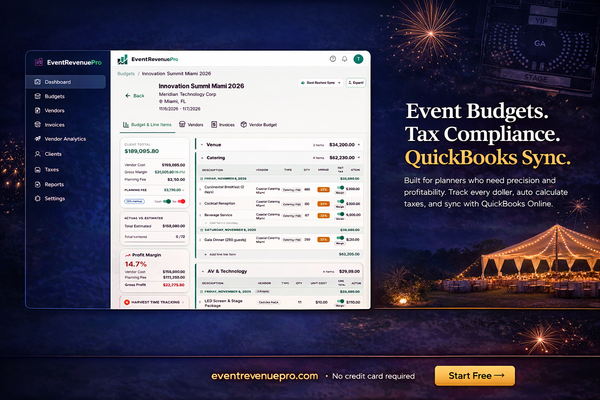
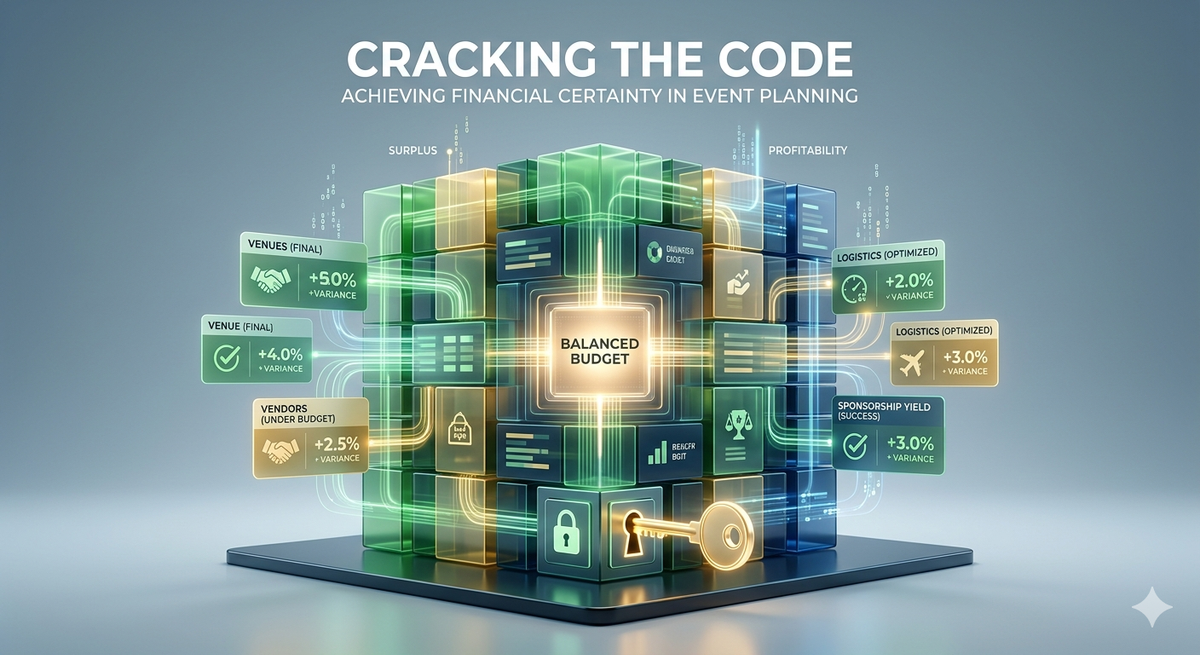
A budget tool built for event planners connects a few things that are almost always separate in a spreadsheet setup. Your vendor costs and your client-facing prices live together, with markup calculated and maintained automatically. When a vendor changes their quote, you update one number and everything downstream adjusts. Categories are consistent and comparable. The running total is always accurate, not just accurate-ish. And when a client asks "where are we?", you can tell them. Precisely, confidently, in under ten seconds. That's not a fantasy — it's just what happens when the tool is built for the job. Getting your markup math right, keeping your categories consistent, and maintaining a single source of truth for both vendor costs and client pricing is entirely manageable when the system is designed around how events actually work. In the next post, we'll talk about the other side of the vendor relationship: once you've booked everyone and the event is underway, the very human chaos of tracking who you've paid, how much, and what's still outstanding.
Next up: The Vendor Payment Chase →
Event Revenue Pro was built to solve exactly this — a purpose-built financial platform for event planners, DMCs, and event agencies. Learn more →