What I Wish Someone Had Told Me in Year One


Part 9 of 10 in the Event Planner's Financial Survival Guide
There's a version of this post that I could write as a tidy listicle. Ten financial tips for new event planners. Here's number one, here's number two. But that's not really how knowledge works, is it? The things that take years to truly learn in this business don't feel like tips when you're living them. They feel like hard-won lessons — some of them expensive, some of them just exhausting. The kind of thing you'd want to share with someone who was just starting out, if they'd actually listen. So let me try to be that voice.
Your Quote Is Not Your Budget
This one probably costs new planners more money than anything else. When you quote a client, you're presenting a price — what they'll pay. That's not the same as your budget, which is what you're planning to spend and what you expect to net. In year one, it's easy to build your quote from a general sense of what things cost and then trust that the margins will work out. They don't always work out. Especially if you haven't accounted for your own time, your overhead, the cost of things that aren't vendor line items (the props you bought speculatively, the mileage you drove, the planning hours that went long), and the markup structure that turns vendor cost into client price. The planners who do well financially have a rigorous budget behind every quote. The quote is the output; the budget is the work.
Deposits Solve Cash Flow Problems You Haven't Had Yet
You'll hear advice to require deposits, but new planners sometimes treat this as a formality — a professional convention rather than a financial necessity. Here's what changes your mind: the first time you're 60 days out from a major event, you've spent weeks of your time, you've placed deposits with multiple vendors, and the client hasn't paid you anything because your payment schedule didn't require it yet. The cash is flowing out of your business. It's not flowing in. And even if the final invoice will make it work, you are personally carrying the risk for a client who might change their mind. Structured payment milestones — a percentage on signing, a percentage at a planning checkpoint, a percentage closer to the event, final balance before or at the event — protect you and your vendors. Require them from day one, not after your first bad experience.
"I'll Track That Later" Always Means It Gets Lost
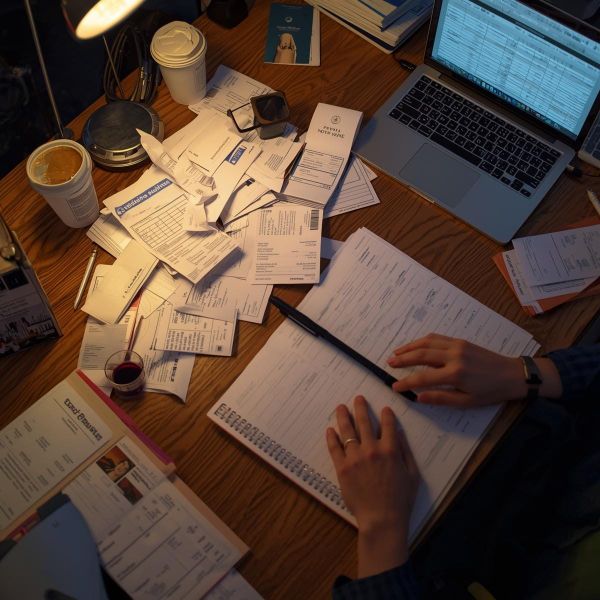
New planners are optimistic about their future selves. Future-you will definitely remember that the linens cost $400, not the $380 you originally budgeted. Future-you will absolutely write down the vendor's revised quote when it comes in. Future-you will update the invoice to reflect the add-on the client requested over the phone. Future-you is often just as busy as current-you and frequently does not get around to it. Every undocumented change is a potential problem: an invoice that doesn't match client expectations, a vendor payment that doesn't match your records, a tax calculation based on a number that was outdated three months ago. The habit of capturing changes immediately — in a system that's built to receive them — saves you from a category of problem that never needs to exist.
Sales Tax Compliance Gets Harder as You Grow
In year one, you might be doing a handful of events, all in your home state, all relatively simple in scope. Sales tax is an inconvenience but not a crisis. By year three or four, if things go well, you might be doing events in multiple states. Your revenue mix includes venue coordination, catering management, decor, AV — categories that are taxed differently in different places. You have corporate clients who want documentation and planners who've gone independent and need to understand their resale certificate options. The planners who understand sales tax compliance early are much better positioned for that growth than the ones who have to reconstruct three years of event records to figure out their exposure. It's worth investing time in this before it becomes urgent. (We talked about it in depth in Post 5 if you missed it.)
The Clients Who Argue About Invoices Tend to Be the Same Ones Who Will Again
I don't have great news on this one. There are clients who are genuinely confused when they receive an invoice that doesn't match their expectations — and those situations are almost always solvable with clear documentation and a patient conversation. And then there are clients who treat every invoice as an opening negotiation, regardless of what the contract says. In year one, you'll probably work with a few of both and not immediately know the difference. By year three, you'll have developed a sense for it. What protects you in both cases is the same: detailed records, a signed budget, a clear contract, and invoices that reference the specific line items and approvals that support every charge. Good documentation doesn't just protect you from the second type of client — it also makes it easy to resolve things quickly and professionally with the first type.
The Tool You Use Shapes Your Habits
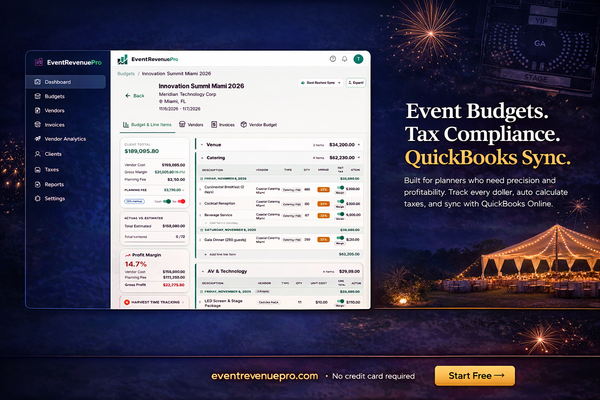
This is the one I'd most want to share with a year-one version of myself. The system you use to manage your finances isn't neutral. It shapes what you track, what you forget, how easy it is to reconcile actuals, and how long it takes to produce an invoice. The planners I've seen struggle most financially aren't careless with money — they're using tools that weren't built for what they do, and the friction accumulates. If your system is a spreadsheet, you'll track what's easy to track in a spreadsheet. If it's a generic accounting tool, you'll invoice the way that tool invoices — even if that's not quite right for your business. If it's a purpose-built platform designed around how event planners actually work, you'll find that good habits are easier to build and harder to break. I wish I'd found a system built specifically for this industry sooner. It would have saved me several uncomfortable conversations, at least one significant reconciliation headache, and a lot of hours I'll never get back. In the final post of this series, we're going to talk about what that kind of system actually looks like — the features, the workflows, the things that make a real difference in practice. I think after nine posts of context, it'll feel like the natural conclusion.
Next up: What a Financial System Built for Event Planners Actually Looks Like →
Event Revenue Pro was built to solve exactly this — a purpose-built financial platform for event planners, DMCs, and event agencies. Learn more →