The Vendor Payment Chase


Part 3 of 10 in the Event Planner's Financial Survival Guide
Picture this: it's six weeks before the event and a vendor sends an email asking about "the second installment." You know there's a payment schedule. You remember agreeing to it. But right now, in this moment, you can't immediately tell them whether that payment has gone out, when it's due, or what the exact amount is without opening three different places to check. That's the vendor payment chase — and if you've been in this business for more than a year, you've lived it.
The Multi-Vendor Reality
A mid-size corporate event typically involves somewhere between fifteen and thirty vendors. Venue, catering, AV, florals, photography, videography, transportation, entertainment, linens, furniture rentals, signage, staffing agencies, security, lighting designers, custom décor vendors, and whoever builds the thing your client saw on Pinterest and absolutely must have. Each one has their own billing terms. Some want fifty percent upfront and fifty percent thirty days before the event. Some want a deposit at signing, a progress payment at sixty days, and the balance a week out. Some invoice monthly. Some expect payment on delivery. Some are flexible. Some are absolutely not. Managing this is a coordination challenge that most planners solve with a combination of email threads, calendar reminders, sticky notes, and willpower. It works — until it doesn't.
The "Did That Go Out?" Problem
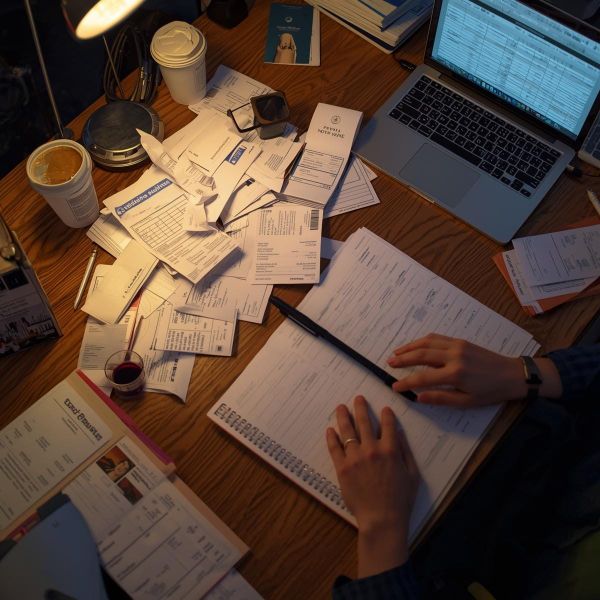
One of the most common vendor payment headaches isn't forgetting to pay someone. It's not knowing with certainty that a payment went out and has been received. You submitted the check request. Or you processed the ACH. Or your bookkeeper handled it. Or — wait, was that the other event? The deposit amounts are similar and the vendor names are similar and your records from six weeks ago are a spreadsheet row that says "PAID" but doesn't say when, how much, by what method, or whether the vendor confirmed receipt. When a vendor asks if their deposit was processed, you should be able to confirm it in seconds. When you're preparing the final payment, you should know exactly what's already been paid and what remains. When you close out the event and reconcile your actuals, the full payment history should be right there. Instead, it's scattered. Email confirmations in a thread you have to search. Bank statements you have to cross-reference. A spreadsheet that captures totals but not the details you actually need when someone is on the phone waiting.
Deposits That Get Lost in the Event Timeline
Event vendor relationships often span months. You sign a contract in January for an August event. The deposit goes out in January or February. By June, when you're deep in production, that deposit feels like ancient history — until you need to know exactly what you've already paid and what the balance is. Keeping accurate running payment records for thirty vendors across a six-month planning timeline is genuinely difficult without a system built to do it. The temptation is to track it loosely and reconcile at the end. But the end comes fast, and the reconciliation scramble is its own kind of painful (more on that in Post 7).
The Balance Due Problem at Final Invoice Time
Here's where vendor payment tracking and client billing collide, and it gets complicated. You're preparing the final client invoice. You need to know the total event cost — which means you need accurate final vendor costs across all vendors. But some vendors haven't sent their final invoices yet. Some sent invoices with amounts different from their original quotes. Some invoiced for things you didn't authorize. If your vendor payment tracking is scattered, pulling together accurate actuals for the final client invoice is a research project. You're hunting through emails, checking your spreadsheet against bank records, calling vendors to confirm balances, and trying to build a coherent picture from sources that were never designed to work together. This is how final invoices get delayed. How clients end up waiting. How billing errors happen. And how planners end up doing financial reconciliation at midnight the week after an event they've already emotionally moved past.
What Organized Vendor Payment Tracking Actually Looks Like
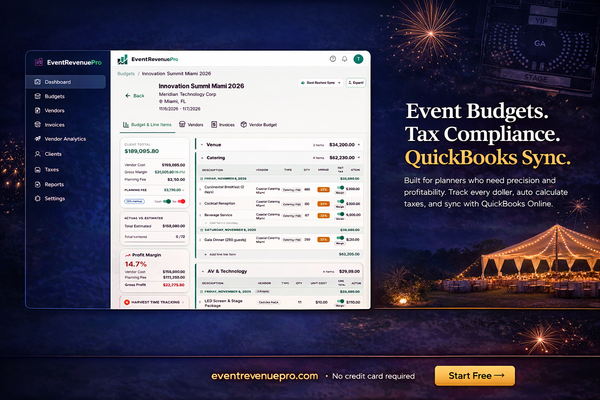
The right setup connects your budget line items to your vendor payment records. When you record a vendor payment — deposit, installment, or final — it's tied to the specific line item it covers. You can see at a glance, for any line item, what you've paid and what's outstanding. When a vendor calls about payment status, you look it up in one place. When you're building the final client invoice, your actuals are already there — no hunting, no cross-referencing, no reconciliation project. The payment history is part of the budget, not a separate document you have to maintain in parallel. That kind of clarity reduces stress, reduces errors, and — not incidentally — makes you look far more professional when vendors and clients ask questions you can now answer instantly. In our next post, we flip to the client side: what it actually takes to send an invoice that gets paid promptly, and the small things that make a surprisingly big difference.
Next up: Sending Invoices That Actually Get Paid →
Event Revenue Pro was built to solve exactly this — a purpose-built financial platform for event planners, DMCs, and event agencies. Learn more →